3 Keys to Balancing User Experience and SEO

I cover a variety of SEO topics on Return On Now, but it is often important to take a step back and consider the full realm of online marketing.

While SEO is most important for presenting your best game face to the search engines, it is not the only variable at play. You also have to keep a close eye on usability.

Usability: What is It?

Usability is a very intuitive concept. Essentially, it answers the question of how easy it is for the average web user to navigate around the website?

Usability includes:

  1. How easy or difficult it is to learn what the site is about on first entry
  2. How quickly it is to navigate to the most relevant content on the site (faster nav and fewer clicks is the goal)
  3. Whether buttons, navigation, and other interactive objects are placed where most users will be able to find them without undue frustration

Well managed usability provides the best possible experience for the readers. This is what we refer to a User Experience (UX).

Balancing User Experience with Search Engine Optimization

There are some common misconceptions about this topic among marketing types. The worst one is that you cannot balance UX and SEO without one of the two (or both) suffering in some way. This is simply not true.

The objective of building a site for both readers / users as well as the search engines is both reasonable and achievable. Sure, you may have to make some tradeoffs in how you architect your site or structure your content to accommodate both needs. But the key point is that minor tradeoffs between the two can result in major gains in user satisfaction, without causing undue negative impact to traffic volumes.

Here are the 3 keys to balancing SEO and UX:

  1. Design your site layout, templates, and architecture for the REAL users. If the site provides a stellar user experience, traffic will come back and grow over time via word of mouth, sharing, and other means. It will also grow via SEO, as one of the factors in Google’s algorithm measures the overall usability of the site.
  2. Structure the content – the title, headers, body content, and image alt-tags – in the best way possible for the search engines. I’m not saying to write a bunch of keyword-stuffed gobblety-goop either. Write to communicate clearly to the average reader, but also be sure you are speaking in the language that people use to search.
  3. Craft your overall site content strategy to provide high value, regularly updated material. Particularly with a newfound focus on timing via the Google Fresh update (October, 2011), you cannot build a site and never touch it again. If you want to move up in the rankings, you need to offer relevant, timely, and shareable materials. Did I mention that you need to write for the readers and not the search engines?

Summary

You may hear from various sources that it is difficult or even impossible to balance SEO and user experience / usability. Those sources are simply misinformed. If you follow the guidelines above, you should be able to deliver on both goals.

Have you found it challenging to balance the two? Let me know what your biggest frustrations are below and I’ll see if I can help.

Enhanced by Zemanta

SEO Content Strategy: The Importance of Personas

There are many components of Search Engine Optimization (SEO), from keyword selection to technical optimization to the way you approach content as a whole. While it was once sufficient to simply stuff a bunch of keywords onto a page and show up well-ranked for those terms, those days are long gone.

Quality and Relevance Are Even More Important than Ever

The Panda / Farmer update introduced quality as a key metric, and it is measured through a rather complicated algorithm. This algorithm reviews the word count, the style, the grammatical correctness, and the type of website it is. Then, it factors in how it ranks sites that it deems “similar”, and assigns a ranking factor there as well. There are no “tricks” to get around this one. Just write good content with correct spelling and grammar, in natural language that a real reader would understand.

Relevance also influences this algorithm, albeit indirectly. Panda incorporates metrics that indicate how readers respond to the content (bounce rate, time on page/site, pageviews / visit, etc. – all readily available via Google Analytics or any leading commercial analytics package). This is a GREAT development for those of us who practice white hat SEO exclusively. Write for your audience, keep them engaged, include keywords that your readers will relate to, and the rankings will come over time.

How to Manage Relevance

The first requirement is clearly to understand  your space. Keep up with the latest trends, jargon, technologies, events, thought leaders, and social “buzz” to start. If you have been in the same industry for several years, you likely already have this covered.

The second, and most commonly overlooked, requirement is to develop good user personas. For those of you who are unfamiliar with the concept, here is my definition of the term as it relates to web content:

A persona is a fictional character that describes your target audience or a segment of your target audience, whichever is most practical for making rational splits in content, tone, and approach.

So basically, a persona is “Joe Customer” or “Jane Prospect”. It is outlined in prose format, often reading like a brief biography of the fictional person. Many companies go so far as to give the persona a name, age, job title, and even a photo. The idea is to get buy-in across your leadership team as to exactly who you are writing for. To know them, their story, what motivates them, what their hobbies are, whatever it is about them that you think you should message to.

Check out some sample personas on the following websites for reference:

Some marketing and IT  types (personas are also useful for Software Interface Design and Usability) are skeptical about this idea. They claim to already know their audience. Some call this a silly exercise. And really, it may not be necessary to document each individual persona…in one situation: where you already know the persona intimately, and you ( and ONLY you) will be involved in generating content for that audience. If you write content for a business with more than five employees, there is a place for user personas.

How to Apply Personas to Content

The first step to moving the needle with personas is to get buy in from the most important decision makers in your organization. We’ve seen far too many persona efforts scrapped mid-way because leadership was not included early enough. It is crucial that those decision makers start to really envision the fictional character to whom you will be messaging. Once you are all on the same page, you will get a lot less pushback later once you turn persona into messaging and finished content.

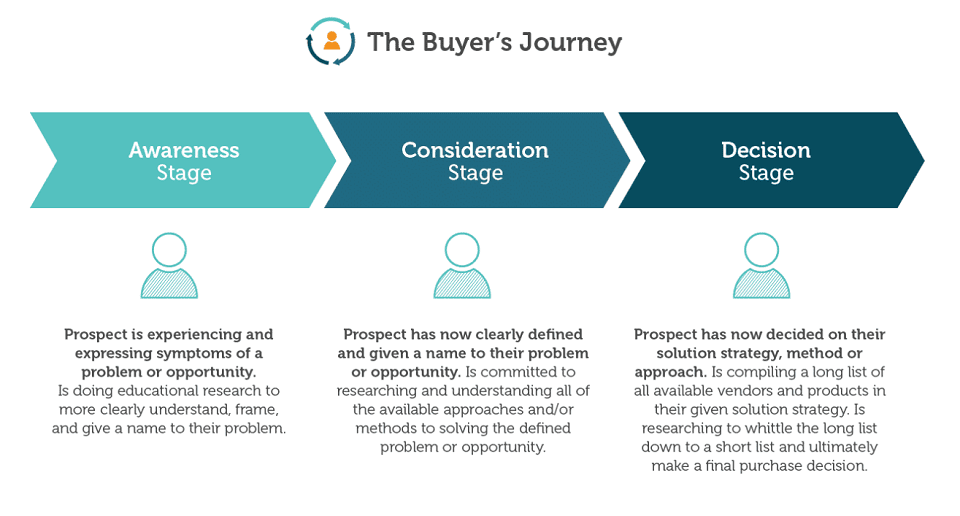
Next, review your customer lifecycle in more detail. Do you already have content for all the key pre-sales stages in the life cycle? Specifically, you should have:

  1. Thought leadership materials that educate (not pitch) the customer on important trending topics in your space? Complete with calls-to-action that drive them to your website for potential conversion
  2. More in-depth content about the technology, technique, service, or product type you sell, and even deeper content about your own products or services
  3. Very focused differentiation and validation materials, such as why you are best, case studies, third party reports, and testimonials
  4. A very clear path to purchasing once they are ready to do so

Now you are ready to take action. Look at each persona and start listing the types of materials they might like to see at each of these points in the life cycle. Look for where there are overlaps and differences, because overlaps are opportunities to write content once, and use it for multiple audiences. Then prioritize based on two factors:

  1. Relative importance to your business or cause for each persona
  2. Areas where you can provide relevant content to multiple personas with the same information or very similar content

Once you complete this exercise, you should have a reasonable start on the content plan to improve your analytics and relevance in tandem.

Summary

User personas are a key component of any content strategy that places relevance at the top of the priority list. With Google Panda now measuring relevance, you really have no choice but to pay attention to this topic. Take time now to be sure you know who your target audience is personally, and enjoy the SEO and increased traffic it will offer to you under the new ranking algorithm.

Have you ever been involved in user persona creation? What worked and didn’t work? Do you have any samples that would help our readers better understand this?

Please share your experiences, successes, failures, and samples in the comments section below!

SEO: Why You Need A Content Strategy

Search Engine Optimization is an ongoing need for any business that is serious about establishing and maintaining good positions on Google, Bing, Yahoo, etc. Many businesses depend on Google alone for more than 50% of their overall traffic.

Achieving that sort of success with SEO takes more than the basics (on-page, backlinks). It requires that your website take another step to plan out a site that is:

  1. Easy to navigate
  2. Structured with broad keywords at the higher levels, and more specific keywords deeper in the nav
  3. Generating quality new content on a regular and ongoing basis

While it is rather easy to dive in and start tweaking the on-page elements that are used by search engines (page title, meta description, H1 / H2 / H3, etc.), the opportunistic online marketing mind will ask the question, “Is this the right content in the first place?”.

Content Strategy Before On-Page

Before diving into the tactics, it makes the most sense to do a self-review of your business, cause, nonprofit, or whatever entity it is that drives you to generate quality content. Map out the categories (e.g. product lines or different audiences served) at the highest level and decide what keywords best match with those categories.

Then line up the most important topic areas in the next level beneath. These will also be keywords. Feel free to even build out more specific topics at the third level (we recommend only three levels for most types of site). Continue until you have a solid plan for what keyword-rich, highly relevant content you need.

From there, you can begin generating or reworking content to fit. As you generate the new material, take a couple of extra minutes to label the right keywords…highest level category, keyword for that level, any long-tail words that make sense….and insert those into the appropriate on-page locations. And be sure to pepper in some conversion pages to collect leads if it makes sense for your business.

Planning Ahead Works

There are multiple benefits to optimizing your website with this approach.

First, it gives you a chance to take a fresh look at your site from a macro perspective. It is so easy to get caught up in the daily minutiae, that we sometimes need to take a step back to evaluate where we are, how we got there, and where we want to be.

Second, the output will be very helpful at beginning your ascent up the rankings. By structuring your website in a way that the search engine crawlers will find logical, they will better be able to connect your website to the keywords you are targeting. The bonus is that, when you relaunch your website or launch a new website, Google will typically do a full crawl of the site quickly, assuming you have an XML sitemap file logged with them.

We Can Help

You can most likely manage the build out of a content strategy yourself. If not, SEO and Content Strategy are specialties of ours. If you need help, drop me a line at tommy (at) returnonnow (dot) com.

Enhanced by Zemanta