
Keyword Match Types for Google AdWords

Google AdWords PPC Logo for Match Types ArticleFor this post, let’s turn our attention back over to Pay-per-click (PPC) and Google AdWords. As a Search Marketing professional, it is important to understand all angles of search. That means you can’t just focus blindly on SEO in the long run.

Sure, SEO is “free” and should be addressed for any website. But once you have optimized the on page and started driving backlinks, you really need to have patience as it all starts to pick up momentum.

Most businesses don’t have time to simply sit and wait. That’s when PPC needs to be taken more seriously.

Keyword Match Types: What Are They?

Google allows you to set the targeting you prefer for your keywords. Targeting is managed using match types. These designate the keywords you want to go after and how tightly you want to focus your ads within the SERPs. Here are the four top-level match types they offer:

Broad Match

Broad match is set by simply entering the keyword into the AdWords interface as a target keyword. If you do not add any modifiers to indicate it should be Phrase or Exact, it defaults to Broad.

Broad allows you to not only show up for verbatim searches of a keyword, but to also show up for variants, misspellings, and terms with similar meanings. While this sounds great in terms of ad impressions to those of us who were brought up in the mass advertising age, it is often the wrong choice.

Since you pay for every click, relevance is crucial. If you show up on a badly targeted SERP, you are guaranteed to pay for bad clicks. And to make matters worse, Google charges more for the same ranking on pages with high competition (meaning a lot of other people are bidding on the same terms), so a broad click is typically the most expensive of all.

Broad is useful for researching new variants of a keyword, but proceed with caution. I recommend you partition off a test budget of maybe 10% of your overall spend to find those new variants. Then go after those keywords using one of the below better targeted match types.

Phrase Match

Phrase Match looks for searches that include a pre-specified phrase, but also include other words around the phrase. You can set a keyword to phrase by putting quotation symbols around it.

For example, if you use “SEO services” as the keyword, your ad would appear on SERPs for “SEO Services in Memphis”, “Best SEO Services in Texas”, or “What to expect from SEO services firms”. As you may have noticed, the order of the words in the phrase must be the same, so “what services should an SEO offer” would not match.

This is useful for tighter targeting overall, perhaps based on location as shown above. Phrase match tends to be less expensive on a cost-per-click (CPC) basis, as compared to broad match. At the same time, it also delivers significantly reduced impressions but is more likely to be relevant to a larger percent of the results on which the ad will appear.

Exact Match

Exact Match, designated by using brackets such as [SEO Services], will only serve up your ad on SERPs for verbatim searches of that term. No other words can appear in the search, which is why it is called exact match.

This is the tightest targeting, most likely to be relevant, and least expensive bidding option. If you know for a fact that a keyword has a lot of volume, is relevant as an exact match, and has low competition (based on number of advertisers bidding for the term), you’ve found yourself a bargain.

The best way to find what terms to target with exact is to start with broad or phrase match and see what searches drive results. You may have a very relevant keyword that never drives conversions or quality visits to your site. On the other hand, you will sometimes be surprised to see what words drive the best results. Target those with exact match to get more clicks with higher potential for success.

Negative Match

Another match type you need to know about is Negative Match. This is how you specify all the words you DO NOT want to match for.

At a previous company, we sold a product that attached to a device called a Network TAP (Test Access Point). Unfortunately, the IT community rarely included the word “Network” when searching.

We started out on broad match and found that a huge portion of our spend was on irrelevant terms! There are kitchen taps, beer taps, tap dance shoes, the song “Taps”, the list goes on and on. So we used negative match types on our TAPs ad group to remove any search including the words kitchen, beer, dance, shoes, song, etc.

More on Match Types

This is just a brief introduction. There is much more to figure out when working with PPC advertising.You can use modified broad match, which allows for more wide variants and misspellings to match. You can now use modified exact or phrase match, which allows for close synonyms to match. And once you get all that down, it will be time to learn about bid stacking to optimize your spend across the various keywords and match types.

Even after managing PPC for nearly10 years, I still learn something new almost every week. Just be creative and willing to learn, and you’ll see the massive potential of PPC to drive results for your business or cause.

Read more about Google’s take on these Match Types at http://support.google.com/adwords/bin/answer.py?hl=en&answer=6100

Google Plus: What Is It Really All About?

Most of you have likely found your way onto Google’s latest experiment in social media, Google Plus / Google+. I have been a member since the second week it was available for sign up, but have held off on making commentary here on Return On Now until I could better evaluate it.

Now that we have had several weeks to use and discuss Google+, it’s time to get in on the conversation.

First Impressions of Google+

The thing that immediately jumped out to me, like most of you, was the interesting implementation of circles rather than following in a one- or two-way fashion (a’la Twitter or Facebook). The ability to target postings to a specific circle is a great feature in concept, although it can be a bit cumbersome to use if you are very active on the site. Either way, it’s nice to have the flexibility.

The site comes with a built in +1 button on all posts, comments, and links. That’s great, especially now that Google has built the feature into their algorithm. Now, the +1 works a lot like the Facebook Like button for both liking and sharing. It’s a good thing they caught up on that one quickly.Google Plus / Google + Screen Shot

The Hangout feature looks interesting, but I haven’t used it much due to a lack of time to play around online. It’s probably cool for some purposes, perhaps virtual meet ups or even a round table, so I still need to find time to play with it.

The Photos tab is an interesting view the first time you view it, but not something I find myself ever drawn to click again. And they’ll have to beef up the games section quite a bit. It might be a unique way to play games, but selections are limited at this point in time, mostly titles you can get on an iPhone.

Overall, it’s interesting, but I still struggle to find the motivation to use it, even after several weeks.

Google Plus as a Social Tool

The biggest issue with Google+ is that it comes across more as a “social tool” than as a social network. Google is a analytical company who provides technical products / tools / services for a variety of purposes. Since they felt they had to “be social”, they have been dipping toes in the water for some time now (e.g. the failed Google Buzz experiment). So they built a tool that incorporates a lot of what you see and like on the leading social networks. And they tried to add additional structure to what has been a bit unstructured elsewhere.

I question whether Google understands what a community is. This is a vastly different animal than something like AdWords or Google Docs. Their communication has been sparse, which is a major issue for those who have been singled out by the Real Names Only rule. The kicker is that they simply group Google Plus with all their other services, and if they kick you off for using a fake name, they kick you off everything!

With so many of us drinking the “cloud” Kool-Aid, moving to Google Docs and Microsoft Office 365, this is a massive error on Google’s part. After all, if this is just a “project” as they have been calling it, why would our other services suffer if we are deemed unworthy for their community? This has not affected me since I always use my real name, but others have been burned badly in this fiasco. Sorry Google, but this is a perfect example of the word FAIL.

Google Plus for SEO and website traffic

I would be remiss without considering how Google+ might impact Search Engine Optimization. After all, we are talking about Google and their 90% market share in search.

One thing they are getting right is the +1 button. By making it easier to share on Google Plus from anywhere online, they get the outstanding effect that the Facebook Like button offers. Even more importantly, it gives the public a chance to voice positive votes for content, even with social sites linking as “nofollow“. This is a huge change, and one that should add a lot of value in social search.

In reality, I’m torn between whether Google Plus is truly an attempt at creating a social network or more about figuring out how to meld social data into search. I actually hope it is at least in part about the latter.

Regardless of their motivations, the market for social networks is already saturated. We have invested too much time in the frontrunners, and I am not seeing the social graph of the masses looking to move. Sure, the social media crowd has jumped on full speed ahead, but even among that group, opinions of Google+ range widely.

Final Thoughts

It will be interesting to see if Google figures it out, or if this becomes just another failed social experiment. Or perhaps it offers some unforeseen value for social search. Some of this could already be built into their search algorithm, and all the refinements we’ve seen over the past 6 months very well may represent them still trying to get it right.

What do you think? Is this a real attempt at being social, or a short term experiment to figure out how to meld social activity into SERPs?

Enhanced by Zemanta

Google Search vs. Display – Pros and Cons

This week, PPC expert Matt Kelly shares his guidance about when to use Google AdWords and when to focus on the content / display network.

____________________

Search vs. Display: What Are They?

In Google Adwords, there are two primary “venues” on which you can display ads, the first being Google Search, the second being the Google Display Network (GDN).

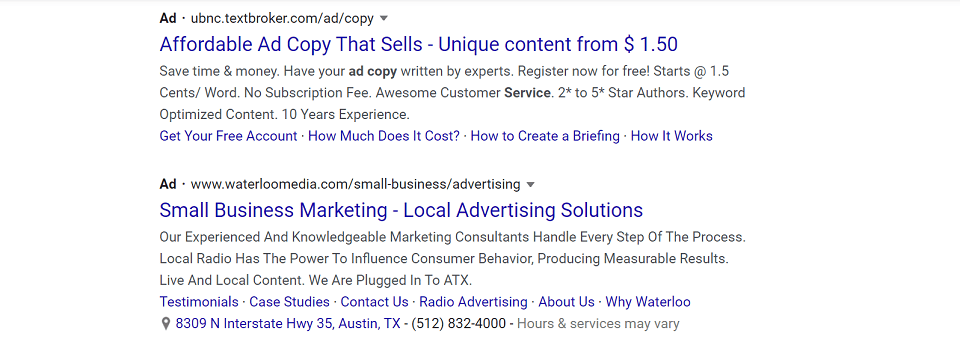
Google Search and their search partners, such as search.aol.com, allow the display of text  ads along with organic results (unpaid) that are triggered by keywords. You type in a keyword or phrase, Google displays the most relevant ads.  When you click on the ad, the advertiser is charged based on an auction price and you are re-directed to the advertiser’s website.

GDN on the other hand are “contextually” targeted ads based on content, interests, or topics. Publishers of content use Google Adsense as the vehicle for displaying ads. In addition, Google uses your demographic data and interests to display ads you might be interested in.

You can view your Ad Preferences at: http://www.google.com/ads/preferences/

So if, for example, you are reading an article about Tiger Woods skipping the US Open and see an ad for the new Nike 20XI golf ball, the ad is there.  Nike recognizes that, if you are reading an article on golfchannel.com, you probably have an interest in Golf. So you might buy golf balls.

On the other hand, if you are reading an article on nytimes.com, you might see the same Nike 20XI Golf ball ad.  Most likely, this ad was displayed because your Ad Preferences indicate “Golf” as an interest.

How to Find a Good Site Where You Can Advertise

There are a variety of ways to find relevant/high quality sites to target.  Generally speaking, I look for them in this order:

  1. Search Google using the most valuable keywords I am trying to target.  I prefer using Google Search initially to find sites to advertise on, since those that show up on the first page are presumably more relevant. From the organic search results, I look at the websites on page one to see if they are running ads from either Google or Double Click. I also check the depth and content of the site for quality. If you see display ads on the site, check the link of the ad by either hovering over it, or look for the “Ads by Google” logo. (Hint: If you are a publisher, invest in SEO so we can find your site. [Double Hint from editorial team: Return On Now can help you])
  2. Next step is to use the Google Adplanner.  Adplanner allows me to more specifically target websites running Adsense based on audience parameters such as geography, language, demographics, online activity, and interests.  Adplanner also provides filtering based on Google Ranking method, inventory, category, ad specific, and domain suffix.
  3. I’ll use the “Placement Tool” in Adwords, even though the results are typically comparable to those found in Adplanner.
  4. I look at the sites referring traffic in Google Analytics to find sites that are sending some traffic, but would be good prospect for sending more.

From the research above, I will add sites as “Managed Placements,” in addition to a list of standard sites I always target such as mail.google.com, ehow.com, about.com. and nytimes.com

Managed placements are my highest value group of websites, as opposed to automatic placements, which are those that Google is determining as relevant and then displaying my ads accordingly.

Think of the difference between Automatic and Managed placements as if they were baseball teams.  Managed placements are the players on the team that have made it to a Major League Team. I hand picked them, and if they don’t play well, I kick them off them team. In the past, they have performed well and are of above average quality.

Automatic placements are those that are still in the farm system working extremely hard to perform well enough to make it to the Major League. Automatic placements, like a Baseball Scout,  are also always on the lookout for new sites to target or new players to add to the team.

Search Pros

  1. Simple to set up and manage

Search Cons

  1. It’s the first thing everyone thinks of when launching a paid search campaign, so the competition for a keyword may be high resulting in poor ROI / Return-on-Investment.
  2. In order to have an effective search campaign, a large amount of emphasis needs to be on targeting high Quality Score keywords
  3. It is available as “Cost-Per-Click” Pricing Only (also referred to as PPC / Pay-per-click pricing)
  4. Text ads are the only format allowed

Display Pros

  1. Lower Cost per click and conversion. On average the CPC is 30% less for display than search.
  2. Remarketing – This is the practice of displaying an ads on GDN  to someone that visited a particular page on your web site
  3. Measuring “view-through-conversion”, which is a metric of the number of conversions that happened within 30 days of someone seeing the ad
  4. Casts a much wider net (better reach) across content that is related to your keywords
  5. Pricing flexibility: Cost per Click or Cost per thousand (CPM pricing)
  6. Better targeting to content-rich and relevant sites
  7. More visually appealing ad options rather than just text
  8. Behavioral, demographic, and geographic targeting capabilities

Display Cons

  1. Getting your boss or client to understand why such a low Click Through Rate (CTR) is a good thing can be challenging
  2. Initial set up is more complicated that search
  3. Initial cost to set up is higher than search as you may incur a cost for advertisement design
  4. Less control can mean lower quality traffic if you are using automatic placement. Automatic placements require increased maintenance to exclude sites that are of poor quality (i.e. one page websites running Adsense on what is essentially nothing more than a doorway page)

So how do you sell this to your metrics-driven Boss or Client?

First, focus on what the key metrics are as follows:

  • Impressions:  Depending on a number of factors, including your overall budget and how much of it is allocated to display, you can see 10-20 times as many impressions as you can in search
  • Cost per click: As a general rule of thumb, your cost per click on display should be 30% less than Search
  • Cost per conversion:  The metric I personally manage to for display conversions is 20% less than search

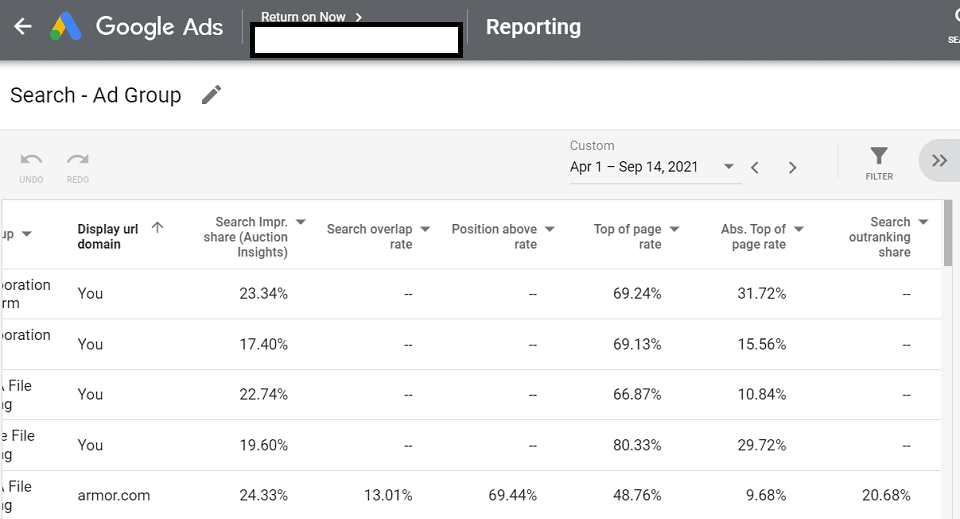
Search Engine Marketing: PPC vs. GDN Metrics

If you are a newbie to display advertising, here is where to start:

  • Have five non-animated banner ads designed. The sizes I recommend are 300×250, 160×600, 200×200, 468×60, and 728×90. You should be able to get a decent graphics designer to design these ads for less than $400. The GDN ad specs are located at: http://adwords.google.com/support/aw/bin/static.py?hl=en&topic=28431&guide=28427&page=guide.cs
  • Create a separate campaign for “Managed Placements.” This will allow you to control the budget separately from search campaigns.
  • Limit that campaign to one of your ad groups so that you are testing a small group of keywords and phrases.
  • Allocate a small amount of your search budget to managed placements. I’d start with 10%.
  • Only use a handful of managed placements, i.e. less than ten. Make sure mail.google.com is on that list.
  • Cap your CPC at 30% less than your search CPC.

The biggest advantage of display versus search is it’s reach and the ability to give a product context through the use of images. As they say, “A picture is worth a thousand words”. So maybe a text ad is worth only one hundred words?

Think beyond just Search.

Bid Management vs. Budget-Based SEM Platforms

This week we bring to you another quality guest post, courtesy of my friend and colleague Gary Walker of Topside Media. I’ve already outlined my thoughts about Gary in a previous post, so I’ll leave it at that.

The following is actually an excerpt from a post he authored back in November. This hits on the high points of the original post. Thanks again to Gary for sharing his excellent work with Return On Now.

_________________________________

In today’s post, I’m going to briefly compare and contrast two types of automated platforms: bid management platforms and budget based platforms. We’re going to stick to how they work and what they do (and don’t do), and [we will] avoid using company names [in the process].

What a bid management platform does

At the most basic level, a bid management platform helps automate bidding and some routine optimization and reporting tasks across multiple pay-per-click (PPC) advertising platforms. Think of these as tools that can help a person who already knows how search engine advertising works do it faster and save time on creating reports. While they can save time on routine tasks and reporting, however, bid management platforms do not perform the most complicated, but essential tasks: design robust campaigns and ad groups that align user intent with your company offering, write multiple versions of text ads, analyze and help fix conversion issues with your website, etc.

Further, some of these platforms will take a sizable bite out your budget, and require up to 5% of total spend every month just for using their online tool.

What a budget-based platform is all about

In contrast, on a budget-based platform, you tell the sales rep for the platform (or the many companies that use a private-label platform) how much money/budget you have to spend. This number is then plugged into your business category in their automated platform, and it combines traffic from multiple sources. At the end of the reporting period, you look back to see how many clicks, “web events”, phone calls, or other metrics you got in return for your money. From our point of view, a lot gets sacrificed so that this can be automated. Just one example of features lost: many of the custom geo-targeting features from Google AdWords.

Transparency, or lack of it

In bid management platforms, the cost to the search engine and the cost to the provider of the bid management tool is usually transparent.

In budget-based platforms, you are unlikely to know what percentage of your budget is spent on traffic and how much goes to commission or fees. Generally, though, the bite is a major one. Further, it may not be easy or even possible to determine how much traffic was search traffic, vs. how much was contextual or other types of traffic.

Some would argue that the results, i.e. how many calls or conversions and the associated cost, matter the most. To some extent, we agree with that point, as long as the numbers are the right ones, and they are in fact real. For example, it is also important to know how many clicks, calls, and emails come from the use of your company name as a keyword. Another key metric that is not easy to get is quality of incoming phone calls: how to filter out repeat calls, how many lasted more than one minute, etc.

(Note: if the two examples make it seem like we are splitting hairs, take a deeper look — results from your company name, duplicate calls, and short calls can each be 20% or more of the total.)

Use Automation Wisely

In reading this, you might assume that I am against automation. Far from it. I’m all for automation, so long as it [reduces] work or cost and does not compromise much quality of the process or results. For example, at TopSide, we recently automated two processes that, when done manually, take too much time and do not deliver added value to clients:

  1. Rather than manually testing the websites we advertise (to make sure pages load quickly), we now automatically “ping” these sites at more frequent intervals.
  2. We now have a reporting dashboard that automatically summarizes click, conversion, and other data from the search engines with data from our phone call tracking system.

Although these tools initially cost quite a bit to build, using them helps our clients, and it helps us too.

_________________________________

If you would like to contact Gary directly to learn more about this topic or inquire about his services, contact Topside Media directly at 512-469-9935, or toll-free at 866-516-2301.

Enhanced by Zemanta

Page Load Speed: Why It Is Critical To Website Conversions and Profits

Enjoy another fine guest post by Gary Walker of TopSide Media.

___________________________________

Page Load Time: Don't Ignore This Important SEO Requirement

Page Load Time: Don't Ignore This Important SEO Requirement

Driving highly targeted traffic to your website is a critical step, but the landing page still has to convert that visitor to a lead or new customer. We recently helped one of our PPC clients whose online business was being adversely affected by slow page loading on their website. Their case could be useful to other business owners.

Web pages that load slowly can be tricky to find. Why? We’ll list just three of the many possible reasons.

For starters, if the slow load is being caused by images or large files, those may be stored in your computer but not in that of a new user to your site, your potential customer. If you have not cleaned your cache recently, you won’t have the same page load experience as a new user — yours will be faster, but deceptively so.

Next, if the problem is intermittent or browser specific, you simply might not run across it unless you or your webmaster test specifically for it.

Third, if you rely on data from PPC ad dashboards or web analytics, but focus on the wrong metric, slow page load problems may not be evident. For example, in search engine advertising, slow page load can “hide” behind normal impressions or click through rate in AdWords. Low bounce rate in your web analytics, which otherwise is a good indicator of user behavior on your website, also will not catch the problem. Why? if the user exits before the page fully loads, the analytics tracking code will not register the visit. However, the lack of results would certainly show up if you were measuring online conversions, incoming phone calls or click to contact or conversion rates in any manner.

In online advertising, if the page load speed problems are significant, they can cause your website to receive a low quality score from the ad provider. This, combined with the other inherent penalties of a slow web page, can trigger a downward spiral: higher click cost, lower page position or even low/no ad impressions. And, of course, low or no conversions.

If you have a webmaster watching your website, page load speed should be part of their normal monitoring. However, It never hurts for you to also know about page loads, and how fast your web pages load compared with those your competitors.

Google: Can You Really Trust Them Or Not?

Google Logo

Surely you have seen the news by now that Google allows certain employees to manually adjust index rankings under special circumstances. Needless to say, the implications are rather widespread.

According to what I’ve read, employees sometimes have to make a judgment call about whether to lower a site’s ranking for a particular keyword or set of keywords.  The main scenario where this is deemed “okay” by Google is when companies vertically integrate to a content-heavy model, using existing “SEO Juice” to enjoy visibility that is not yet deserved. That certainly seems like a good thing, does it not? Particularly since big brands can leverage existing budgets, SEO benefits, etc. much more easily than the smaller outfits or self-employed. In a sense, it can serve to provide a little bit of level to the playing field, whether inconsequential or not.

The issue that this raises is much more concerning, though. If employees can manually adjust rankings based on that situation, what else might be going on “behind the curtain?”

Let’s look at a few spins on this scenario where this is particularly concerning:

  1. The employee has a significant portion of his/her nestegg invested in the company in question
  2. The employee has relatives or friends employed by or invested heavily in the company
  3. The company in question is one of the top advertisers on Google AdWords (i.e. they contribute a rather noticeable amount of revenue to the company’s coffers)

Obviously, you have to presume that Google takes every precaution possible to employ honest, trustworthy individuals.  But even the most stringent interviewing, background checks, and even IQ/Compatibility testing can be fooled or just plain incorrect. In other words, in a company of this magnitude, you can’t hit the bullseye every single time you make a hire.

When you insert human judgment into the equation, everything changes. This mystical and ever-changing Google “Formula” is no longer strictly driven by rules and standards. The whole model comes under question. And, much to Google’s chagrin, they may no longer be able to keep their”secret sauce” so close to the vest, lest the company open itself up to an onslaught of potential legal challenges.

As perplexed as I am about the news, I’m also intrigued to see where this takes us. Will the “new Microsoft” finally take its first big legal smack to the face? Will this blow over without much ado? I don’t know about you, but I want to be sure that they are actually doing everything they say they are. One lie suggests there may be more, so best of luck to the Google PR department on getting some rest over the coming days and weeks.

What do you think? Am I overthinking this, or do you also have issues now with their credibility? Can you afford to bail on AdWords completely, or is it too important to your ongoing operations to bail?

Search Engine Marketing: Using Google AdWords As A Research Tool

Please enjoy the following guest post written by my friends at Top Side Media.

______________________

In our experience with search engine advertising, one of its unique aspects is that, in addition to directly generating online sales or leads, its robust settings provide an excellent tool for business research and planning. In the creation and management of search engine ads, the campaigns, ad groups, and more granular settings gather a great deal of useful data.  This is particularly true for Google AdWords.  When specifically set up for testing, the potential is a marketer’s dream.  For example, we control the following primary variables:

  • Who sees the ad (by IP address and the search terms they use)
  • What URL, ad message, or offer they initially respond to in the text ad (with the option to drive equal amounts of traffic  for A/B testing)
  • What landing page content or secondary offer they view and respond to by converting

For this article, perhaps the best way to describe the potential of these is through scenarios:

Gauging interest in a new product, line extension, or service
If your B2B or B2C company is considering a new product or service, but is unsure of the demand in a specific geographical territory, search engine ads can function as a real-time focus group.  You can post an article, white paper, online questionnaire, survey, or any useful resource on your website that works as an interim/substitute conversion.  The response is a useful indicator of how the proposed product or service will do.  For example, if there is low search volume online, the new effort will likely require a lot of education to generate online demand.   As stated earlier, the click through response can be tested on different offers and messages in text ads.  Finally, the onsite offer or content can be tested, provided there is enough time and search data available.  This data can be compared to deeper conversion data from a known category to help project how the new product or service would impact your business.

Service businesses – considering changing or expanding territories or locations
We have a corporate client whose regional locations provide services to homeowners.  When gas prices rose rapidly, they wanted to consider the benefits and impact on their business of temporarily reducing the geographical territory in which they advertise for new customers.  The goal was to reduce the miles driven, which would save fuel costs and increase the amount of time technicians were performing billable services.  By testing with different custom geotargeting, and projecting the new search and click through data with their previous conversion rates, we were able to accurately estimate how many fewer searches (thus appointments, jobs, and revenue) they would receive if they reduced their service area being advertised.  The same testing process would also work if an expansion in territory is being considered.

Testing messaging, offers or a new domain name
If a company is considering rebranding, creating a new tag line, or microsite, text ads can be used to test the initial response to the proposed change.  Changing and testing one variable with equal amounts of traffic is a simple way to quantify which version potential customers like.  Since impression and click data are initial indicators of interest, to project profitability and overall success, there should be additional tests to see which variables on the landing page get higher conversion rates also.

Retail business – inventory planning, pricing, and more

For businesses that are subject to fads or trends, such as the retail bicycle industry, search data can be used to predict future business activity and needs. For example, we can monitor search/impression data by category, such as generic searches for road bikes and compare it with similar searches for mountain bikes. If a sustained shift in the ratio of searches in the two categories occurs, that could predict the number of upcoming sales of units for first time buyers by category. This data could be used to help with ordering, managing inventory, pricing, merchandising, and more.

The scenarios above are simplified for the amount of space available in this post. In the same way the process works for a retailer, it could be equally beneficial to a car manufacturer as a leading indicator for planning their production.

Why search engine advertising data works as a research tool
Because the data being gathered is actual consumer or end user search behavior, it is free of many of the biases inherent in focus groups or questionnaires.  Why? In situations where participants know they are being observed or questioned, many times their answers are skewed.

Because we control so many elements, Google AdWords allows testing that would be more difficult or impossible with natural, more random traffic to a website.    Many settings, such as the use of negative keyword filters and conversion tracking tools help us dial in the traffic to make Google AdWords a very effective research tool.

_____________________

Top Side Media specializes in Search Engine Advertising, Incoming Lead Generation and Landing Page Testing. For more information, visit their website at http://www.topsidemedia.com/